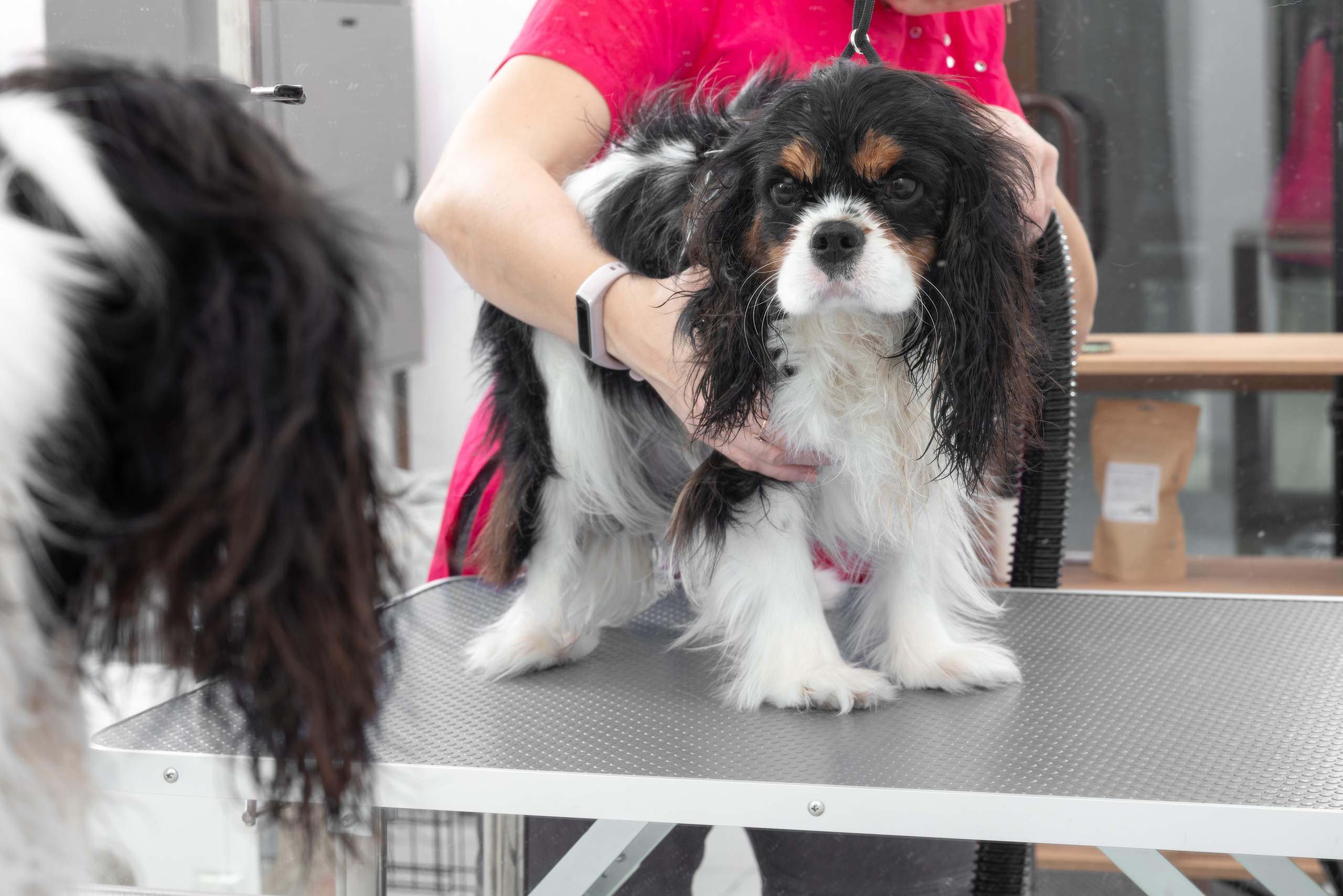
It goes without saying that having the right tools makes all the difference when it comes to grooming your dog. But does that mean that you should have an overwhelming array of brushes, combs, clippers and other accessories?
Not necessarily. The key is finding the tools that work for your dog’s coat and grooming requirements, as well as your ability to use them.
Begin with your dog’s coat
Before you start investing in different grooming tools, it pays to know what kind of coat your dog has.
Is it short or long? Is it fine or thick? Is it straight, wavy or curly? Does it shed or tangle easily?
All of these things affect the types of tools that you will find most helpful.
Short Coats
Dogs with short coats can be groomed using fairly simple tools like grooming mitts or a bristle brush.
The goal is generally to get rid of any loose hair or dirt and keep the skin in good condition.
Long or Thick Coats
Coats that are long and thick tend to need more frequent brushing and might benefit from a range of brushes and combs.
Proper tools will help you avoid mats becoming an issue.
Pick a brush that matches the job
There are different types of brushes for different jobs.
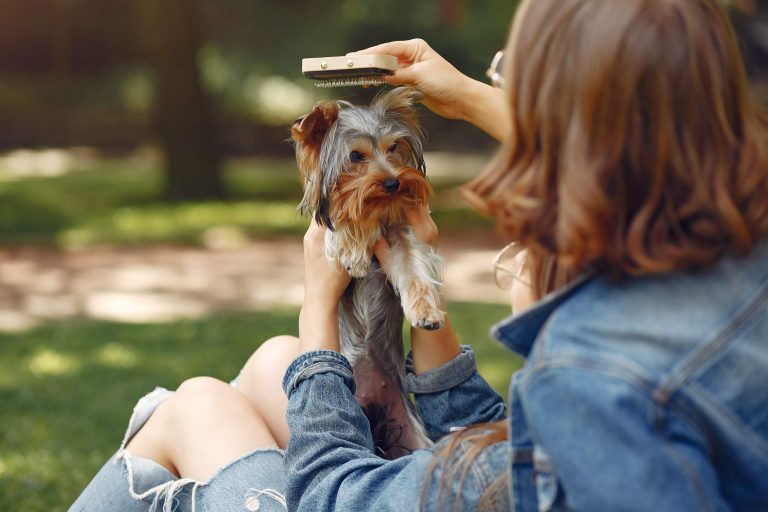
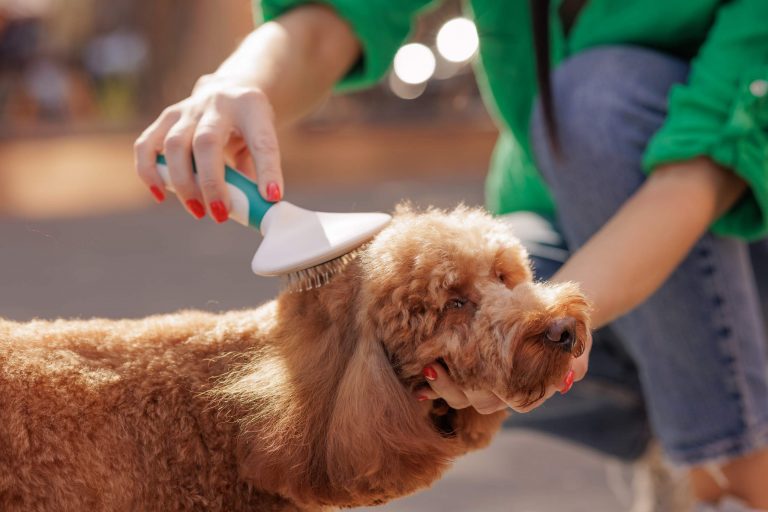
Slicker brushes might help with some longer or wiry coats, while bristle brushes are useful for getting rid of surface-level debris and loose hair.
Don’t Apply Too Much Pressure
No matter how great your brush is, it won’t do you any favours if you use it too harshly.
Take care to use smooth strokes and watch how your dog reacts to them. You’re trying to remove loose hair and tangles without pulling on your dog’s healthy coat and skin.
Have a comb nearby
A comb is particularly useful when you want to see if you’ve fully brushed a section of your dog’s coat.
After you’ve brushed, try running a comb through the parts of your dog that are likely to tangle.
Finish off with a comb
If you can run the comb through the coat without trouble, then it’s likely that there aren’t any major tangles in the area. If the comb keeps catching, revisit those areas and try again.
Look for detangling tools
Some dogs with longer, thicker or more prone-to-tangle coats might benefit from a tool designed to help untangle them.
Again, use these carefully.
Don’t Pull at Large Mats
Mats that are large or tight can cause pain and discomfort when you try to get rid of them. If your dog’s coat is already severely matted, trying to cut through the mats can end up harming your dog if you don’t know what you’re doing. In these situations, consulting a professional groomer is the safer option.
Clippers and trimmers
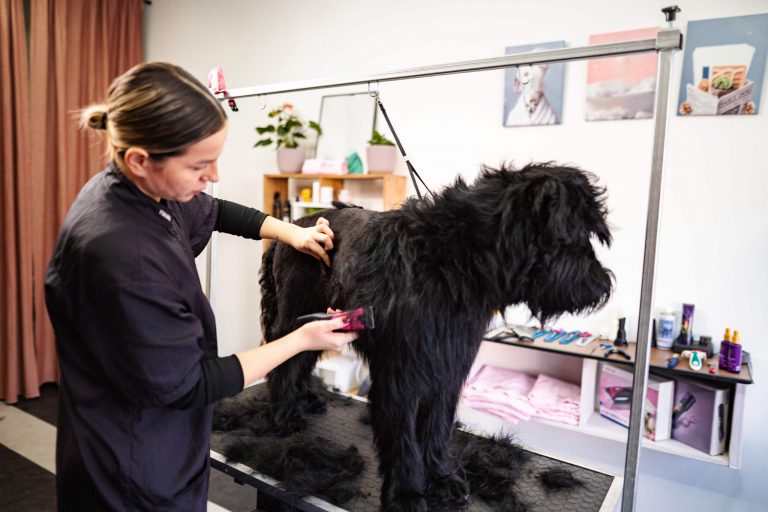
Clippers can be useful for some aspects of grooming, although they require more training than brushes.
Make sure you learn how to use them properly and decide where it’s safe to trim your dog.
Maintain your blades
Like everything else, your grooming equipment should be kept in good working order. Tools that are dull or poorly maintained might not work as effectively and could cause more discomfort.
Nail clippers
Nail clippers and grinders are essential for keeping your dog’s nails in shape.
Ensure that the clippers you buy are suitable for your dog’s size and nail shape. If you’re unsure about how to use these tools, a professional groomer can show you the right way.
Other items
A grooming kit can also include things like:
- Towels
- Dog-friendly shampoo
- A suitable comb
- Cleaning supplies
- Grooming table or non-slip mat when applicable
As you can see, the contents of your grooming kit will vary depending on the dog and the type of grooming you intend to do.
Maintain your grooming tools
Because your grooming tools will come into contact with hair, skin, dirt and other substances, you’ll need to clean them frequently.
Inspect your tools regularly.
Get rid of damaged tools
If a brush has sharp edges or broken parts, or if another tool isn’t working properly, get rid of it. Using old or broken tools makes grooming a less pleasant experience.
Add to your grooming kit over time
You don’t need to buy every item in your grooming kit all at once.
Begin with the basics and learn how to use them. Later, you can add extra tools to your kit when you need them.
Wrap up
Ultimately, the best grooming kit isn’t necessarily the biggest one. Instead, it’s the collection of tools that suit your dog and allow you to groom them safely.
Identify your dog’s grooming needs, choose the right tools, keep them in good condition and learn how to use them. Then you can move onto more involved grooming practices.
With the right tools and the right knowledge, grooming your dog is a whole lot easier.