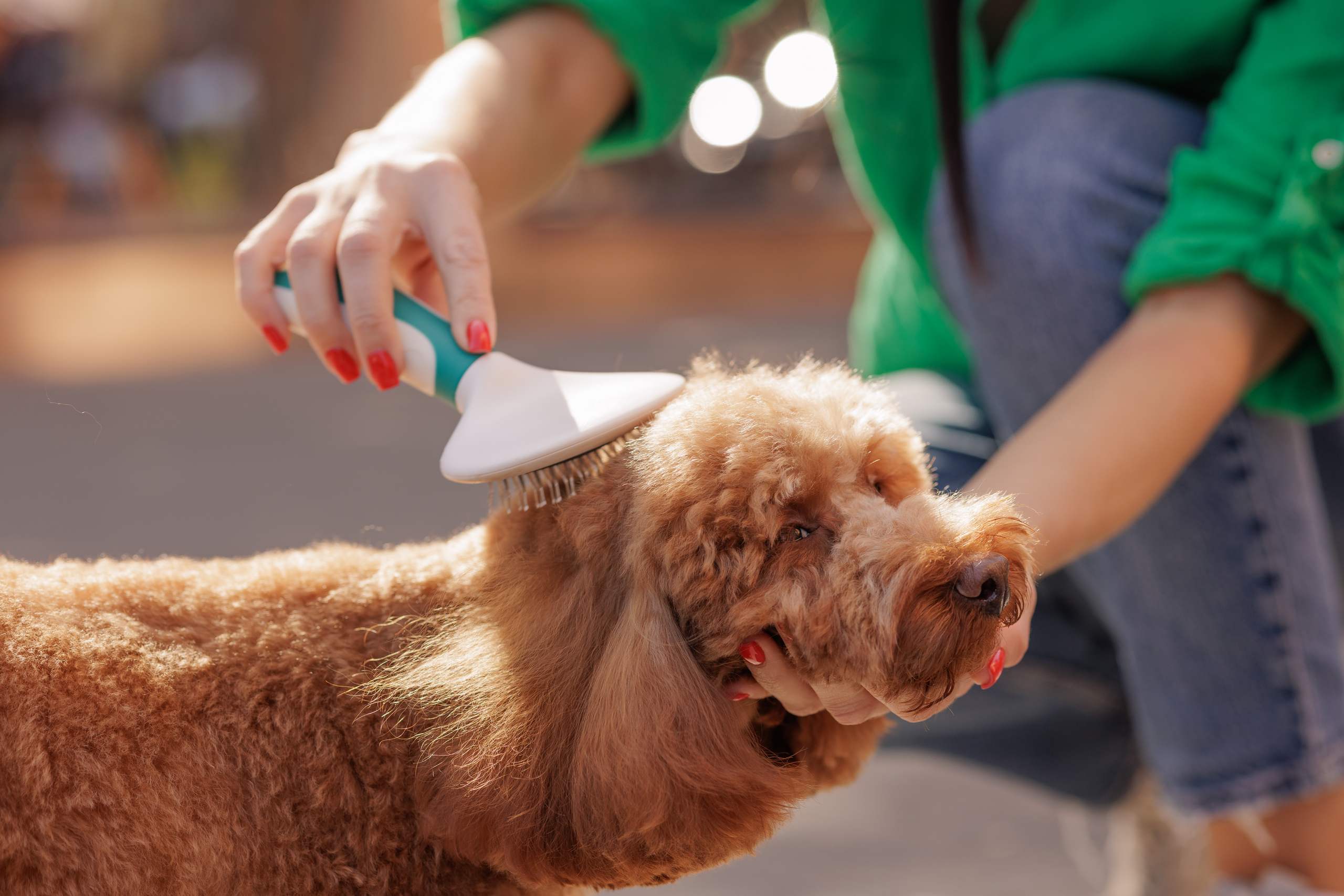
One of the easiest and most necessary elements of dog grooming is brushing. It helps to get rid of dead hair, dirt, and tangles and keep the coat in great shape. But brushing isn’t simply taking a brush and running it through the dog’s fur. Every type of coat requires a different approach and using the wrong tools and techniques will make your dog uncomfortable.
Use the Right Brush for the Job.
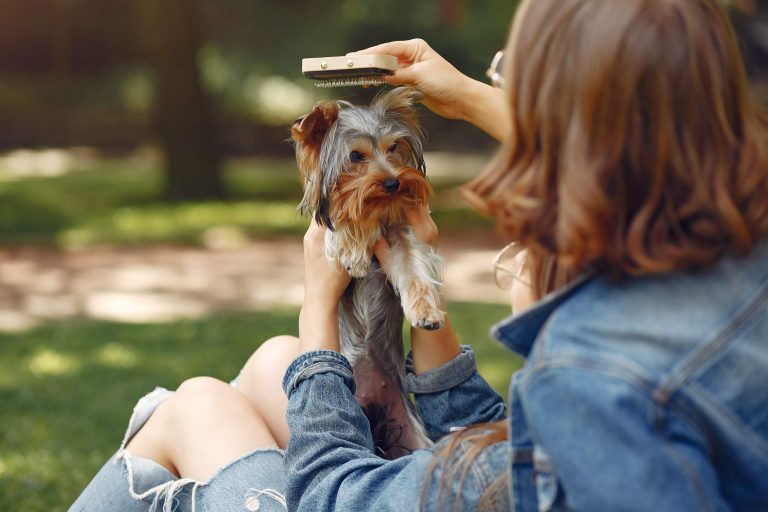
You’ll want to choose the right brush for your dog’s coat. Some short, smooth coats may only need a regular bristle brush or grooming mitt. A thick, curly, or long coat might need more specific brushes.
Determine the type of coat.
Take a look at the length, thickness, and texture of your dog’s coat before choosing a grooming tool. What works for short-haired dogs might not work on a long-haired dog, or one with a dense double coat or curly coat.
Be patient.
If your dog hasn’t had the pleasure of brushing, don’t jump right into a long grooming session. Show your dog the brush and let them sniff it first. Start with some gentle strokes in places your dog likes to be petted.
Keep the brushing a positive experience.
Work slowly and with short grooming sessions. Reward your dog with praise as you go so that brushing is a familiar, pleasant part of their routine and not something they’re afraid of.
Brush with the grain of the coat.
For most grooming purposes, start brushing in the direction the hair grows. Move the brush along in controlled strokes instead of pulling hard on the fur. If you come across a knot, don’t just drag the brush through it. Try to work around the knot and use an appropriate method for removing it.
Check problem areas.
Certain areas of a dog’s body are more prone to tangles. Watch these spots closely when brushing:
- Behind the ears
- Under the legs
- Around the collar
- The chest and stomach
- The tail
You may need to pay extra attention to these areas, especially if your dog has a longer coat.
Don’t rush mats.
Mats are clumps of matted fur that pull on your dog’s skin and can cause pain and discomfort.
Don’t pull through a mat.
Attempting to pull through a mat with a brush can injure the dog and make grooming even more difficult in the future. While minor tangles can sometimes be worked out with certain brushes and combs, a heavily matted coat should be left to a professional groomer.
Keep up with the brushing.
Every dog needs a regular brushing schedule based on their coat. Some dogs only need occasional brushing, while others with long hair or high-maintenance coats may require brushing daily.
Groom often.
It’s better for both you and your dog to perform short grooming sessions more frequently rather than letting tangles build up. Doing this also makes it easier to catch any changes in your dog’s coat or skin.
Examine the skin as you groom.
This is also a chance to take a look at your dog’s skin. Look for signs of irritation, like redness, swelling, or open sores. Also, look for parasites and painful spots. If you find anything concerning or your dog responds poorly to a certain spot, do not keep brushing that area. Talk to a veterinarian if needed.
Keep your tools clean.
Grooming tools collect dirt, hair, and other residues. Clean the brushes and combs after every use and ensure that they’re in good working order. Using damaged or dirty tools can make brushing less comfortable for your dog.
Conclusion
Good brushing is all about finding the right tools, using a gentle technique, and brushing regularly. Learn your dog’s coat and how to work it, start slow, watch for problem areas, and never pull through painful mats. With a steady routine and a little care, brushing can become a quick and easy part of your dog’s daily grooming routine.